


Marketing Recruitment Review Sheds Light on Hybrid Working in the Marketing Sector
The Covid pandemic introduced new phrases into everyday language — “unprecedented times”, “furlough”, “working from home”, “hybrid working” and “the new normal”, to name just a few.
More than three years on from lockdown, the way we work continues to evolve. The “new normal” has shifted again. Our latest Marketing Recruitment Review shows that just over half of marketers now work two or three days per week in the office, while only 11% are office-based five days a week.
Pre-pandemic, just 24% of those surveyed worked from home at least one day per week. The scale of change is remarkable.
The Value of Office vs Home Working
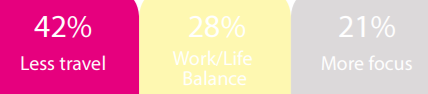
Only 22% of respondents saw no benefit in being in the office from a teamwork perspective, suggesting marketers still value face-to-face interaction. However, this sits alongside a clear appreciation for focused home working, where projects can progress without interruption.
Commuting time also remains a significant factor, influencing both productivity and engagement.
Global Trends and Return-to-Office Pressures
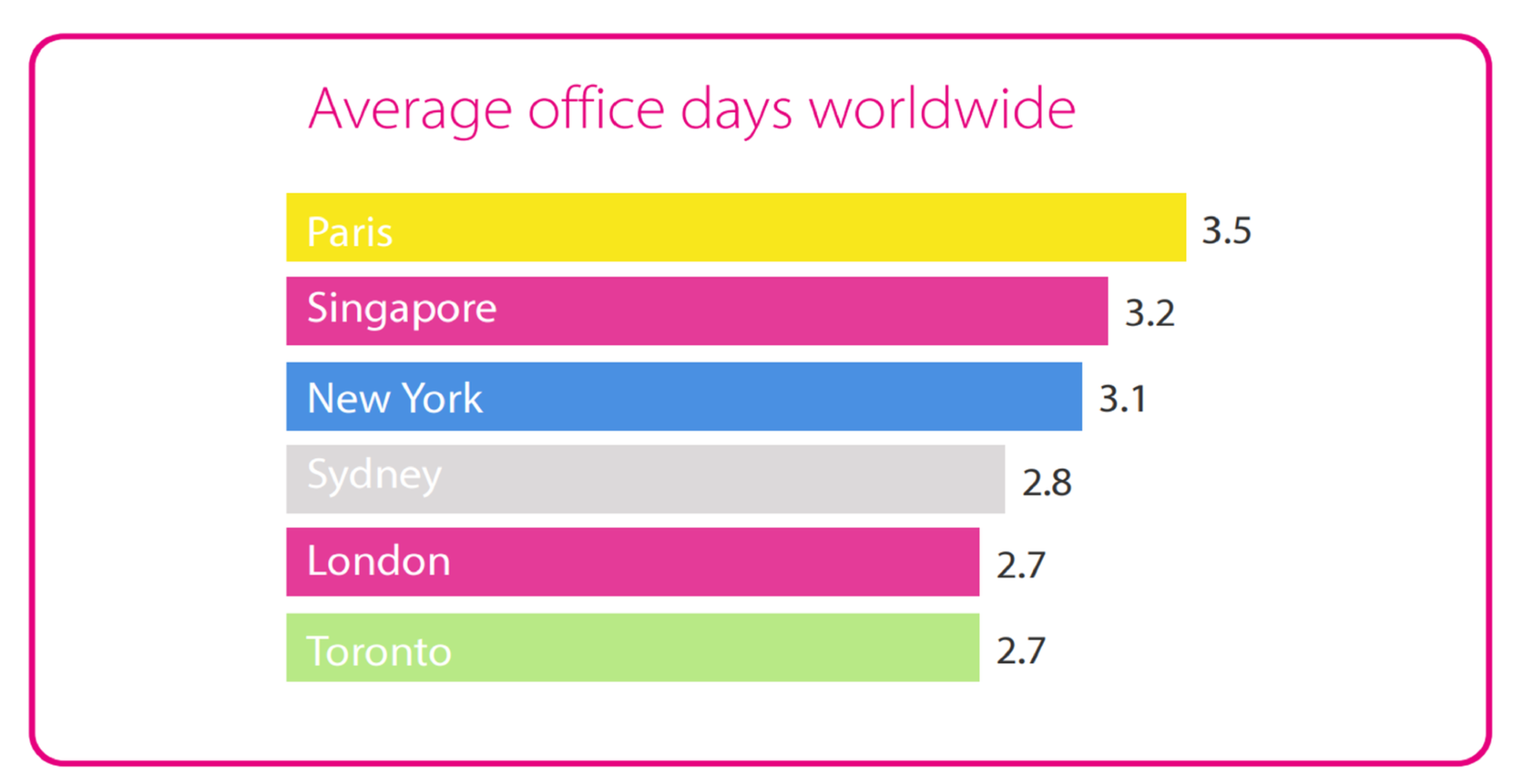
Data from a Centre for Cities study highlights how different cities are returning to office-based work at varying speeds. London is seeing increased office attendance, but at a slower pace than many global counterparts.
LinkedIn research from November 2022 found that 49% of leaders favoured a return to pre-pandemic working patterns. More recent research from KPMG suggests 83% of leaders expect this to happen within three years.
A phenomenon known as “productivity paranoia” — a lack of trust in employees’ effectiveness when working remotely — accounted for 10% of respondents favouring a full-time office return.
Globally, data remains mixed and often contradictory, adding uncertainty to decisions around Return to Office (RTO) mandates.
The Risk of Forcing Office Attendance
Two consistent themes emerge from the data. First, increasing required office time is likely to prompt some employees to look for new roles. Second, this trend is more pronounced among senior professionals.
Gartner research found that 30% of senior executives would leave if RTO policies were enforced, compared with 19% of junior employees.
Our own findings suggest marketers are slightly more resistant to increased office attendance than the wider workforce. This may be because some marketing roles — such as Trade Marketing Managers — have historically involved field-based or remote work. Regional differences may also play a role, with London-centric sectors often favouring office-based norms.
Balancing Business Needs with Talent Retention
While there is undoubtedly a gradual return to workplaces, employers must involve staff in decisions around working arrangements. Insisting on five days per week in the office can have unintended consequences.
As marketing recruiters, we regularly speak to candidates leaving roles purely due to increased office mandates. We also see how much harder it becomes to recruit when clients insist on full-time office presence, significantly narrowing the talent pool.
Any increase in office attendance should be purposeful, linked to specific activities where in-person collaboration adds value.
As Microsoft’s 2022 Work Trend Index noted: “73% of employees say they need a better reason to go into the office than just company expectations.”
Find Out More
For more information on how hybrid working in marketing is evolving, email info@brandrecruitment.co.uk.
For marketing jobs or more information about our marketing recruitment services, visit www.brandrecruitment.co.uk.